
OEMs Lift Server Prices 15% — The Pulse Tracks the Aftermarket Alternative
By DRAM Resource Editorial Staff
Dell, HPE, and Lenovo have now each moved to pass through the full weight of the AI-driven memory-component shortage onto enterprise server list prices — a ~15% across-the-board uplift that landed in Q2 2026 catalogs. For procurement teams running on fixed capex, the timing is inconvenient. For ITAD operators and secondary-market buyers, it is a signal worth reading carefully.
What the OEM Numbers Actually Mean
A 15% server price increase is not a single-factor move. It compounds module procurement cost, board assembly, and margin protection into a single list-price delta. When that happens simultaneously across the three dominant OEM channels, buyers have no natural competitive-pricing relief inside the branded tier. The question shifts from which OEM to which channel.
The pressure is structural: AI infrastructure buildouts accelerated DIMM absorption far faster than wafer capacity expansions could respond, and DDR5 transition overhead tightened density-per-dollar economics at the same time. The OEMs are not gouging — they are passing through real cost pressure.
The Aftermarket Curve Tells a Different Story
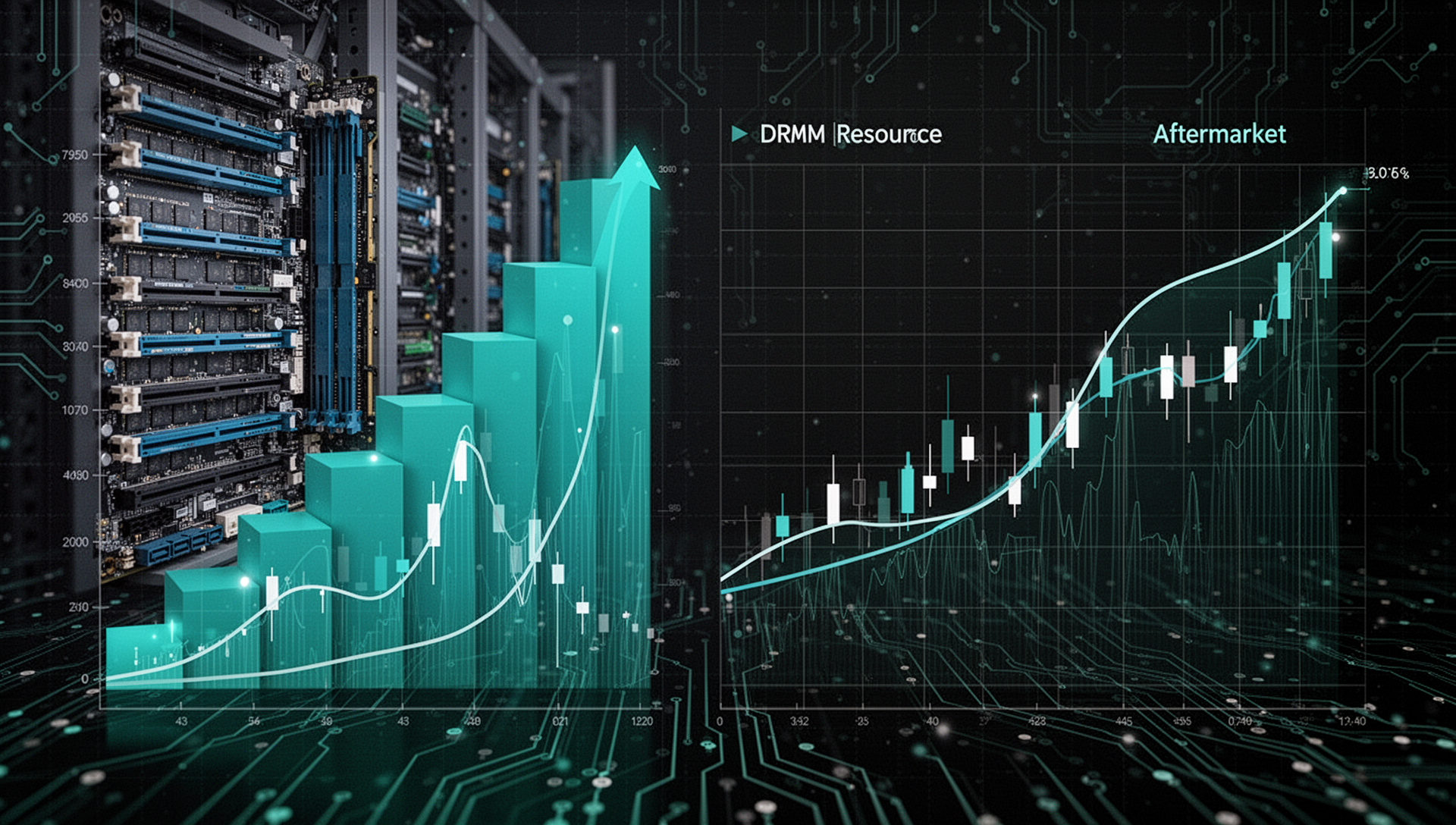
Secondary-market clearing prices for enterprise DRAM modules — tracked continuously by the DRAM Market Pulse tool — have not traced the OEM ladder. This period's Pulse readings show aftermarket DDR4 RDIMM (32 GB, ECC) holding at a meaningful discount to new-channel equivalents, with clearing velocity stable. DDR5 aftermarket supply remains tighter but still lands below OEM-refreshed list.
The divergence is the actionable data point. When OEM list prices step up sharply and aftermarket clearing prices remain anchored, the effective spread widens — and that spread is the procurement opportunity. Institutional buyers who can qualify secondary modules against their platform specs are staring at a cost-of-ownership gap that compounds over a multi-rack deployment.
What the Pulse Shows This Period
Pulse readings this cycle confirm three patterns:
1. DDR4 RDIMM clearance is accelerating. Enterprise refresh cycles are releasing DDR4 inventory into the secondary pool as organizations migrate to DDR5 platforms. Supply is ample and ask prices reflect it.
2. DDR5 aftermarket is tightening but remains below OEM list. AI-adjacent workloads are consuming DDR5 at pace, but secondary supply from first-wave DDR5 deployments is beginning to materialize. The spread versus OEM list is narrowing, not closed.
3. Mixed-density lots are moving fast. ITAD operators listing mixed-capacity lots (16 GB + 32 GB RDIMM) are seeing shorter days-to-clear than single-capacity listings — a sign that buyers are optimizing for flexibility, not uniformity.
The full current-period dataset is available in the DRAM Pulse Report.
The Procurement Case
For corporate buyers weighing a server refresh against Q2 OEM pricing, the math is straightforward: validate secondary-market pricing via the DRAM Market Pulse tool, qualify modules against your platform's QVL, and quantify the per-unit savings at scale. On a 20-node deployment, a 12–18% module cost reduction translates directly to capex relief without a spec compromise.
ITAD operators feeding the secondary pool benefit from the inverse dynamic: elevated OEM pricing strengthens demand for certified secondary stock, supporting stronger liquidation values on outbound lots.
For ongoing pricing intelligence, the Industry Analysis section and the Industry News feed track both OEM catalog moves and secondary clearing trends as they develop.
Bottom Line
OEM server price increases are a procurement headwind, not an inevitability. The secondary market is absorbing that pressure at a different rate, and the data is there to act on. The Pulse exists precisely for this: to make the spread visible in real time, so buyers can make informed channel decisions rather than defaulting to list price.
References
- AI Memory Shortage and Enterprise Server Pricing Dynamics — https://www.hbs.net/blog/ai-memory-shortage
- DRAM Resource DRAM Pulse Report (current period) — https://dramresource.com/dram-pulse/report
- DRAM Resource Industry Analysis — https://dramresource.com/industry-analysis
Questions or comments? We'd love to hear from you — reach the editorial team at info@dramresource.com.